
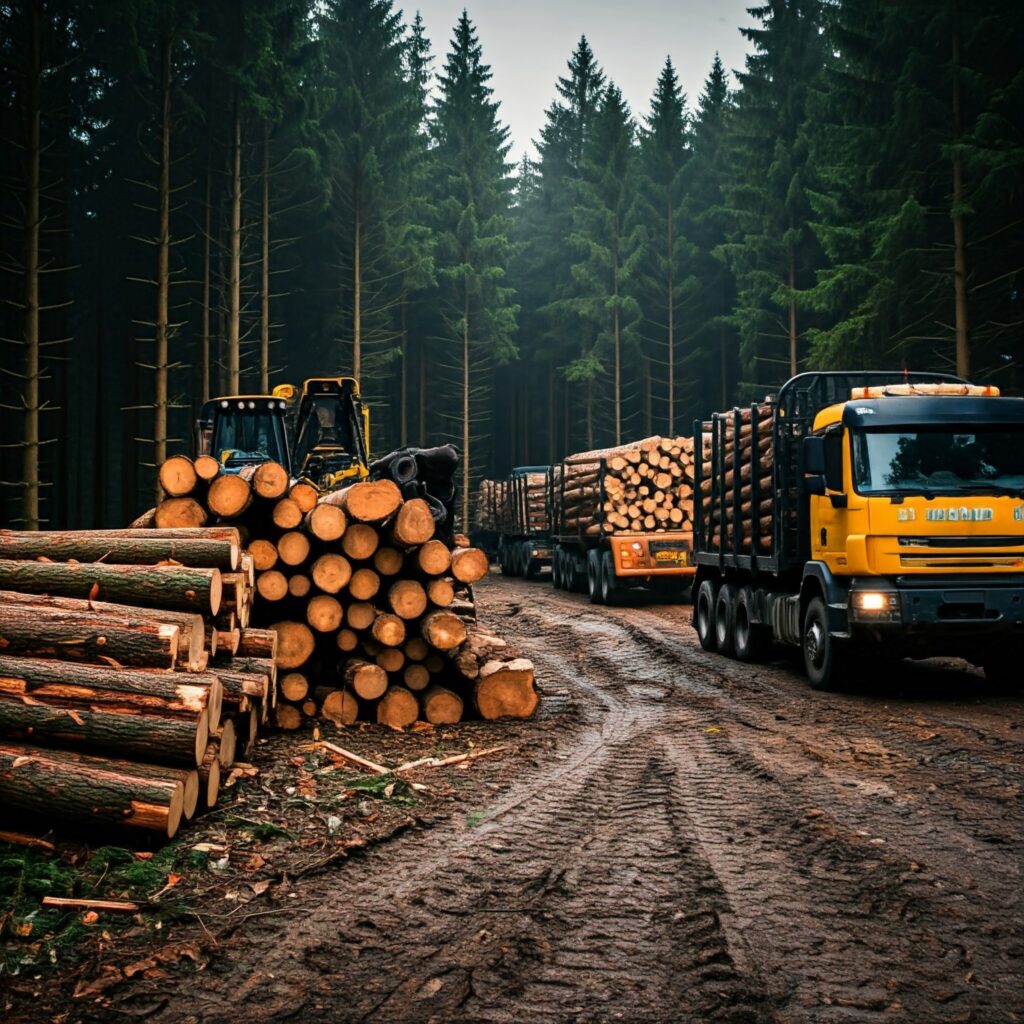
Harvesting wood has significant GHG impacts. However, product LCAs, research papers and policymakers have largely overlooked the contribution that wood harvesting has on fueling climate change, particularly in the northern Hemisphere.
A recently published paper in Nature estimates that over the coming decade, global wood harvests will add up to 4.2 billion metric tons of greenhouse gases to the atmosphere annually. That represents more than 3 times the annual emissions from aviation and the equivalent of total annual emissions from deforestation and agricultural expansion.
These emissions will continue to increase by about one third per year for the next 40 years over the 2010 benchmark due to a projected 54% rise in wood harvest levels. Producing this wood will require harvesting an area equal to the continental United States.
However, many lifecycle analyses of timber and paper production treat the harvest of wood as being climate neutral and having no effect on the climate…as long as the harvest is “sustainable”. This usually means that the quantity of wood harvested each year does not exceed the growth of wood in a large forest area, sometimes a whole country. The logic behind this approach is that if tree growth anywhere in the forest cancels out the effects of harvesting wood in parts of it, existing carbon in the forest remain stable.
This “logic” ignores the fact that if these new wood harvests did not occur, forests would continue growing and take more carbon out of the air. Research papers have used a similar approach to create the impression that while harvesting wood in the tropics has a climate cost, doing so in the Northern Hemisphere does not.
The justification for this approach is based on the fact that historically countries in the Northern Hemisphere have cleared so much land in the past they have regrowing forests, and these forests are achieving net growth despite harvests. Often, researchers counting the effects of wood harvesting only report the net changes, and since it is positive, even when harvests have reduced the size of growth, the added carbon to the atmosphere is never accounted for.
Even the national climate accounting rules required to report to the United Nations can lead to the conclusion that timber harvest in the north have no net impact. The rules allow countries to report only the combined or “net” changes in forests considered “managed.” Because of net growth, it can appear in national “inventory” reports that wood harvesting has no effect, even though the carbon sink in these forests is being reduced.
A new approach is essential to properly account for the GHG impacts associated with harvesting wood. It should credit regrowth but also factor in the climate consequences of higher emissions and increased warming for decades. Researchers from the World Resources Institute that published the article in Nature have come up with a model that calculates the GHG “costs” of harvesting wood by placing a value on these additional emissions for decades. This new model, (the Carbon Harvest Model or “CHARM”) applies a discount rate to changes in removals and emissions with earlier changes having a higher value than later changes. The model also accounts for sequestration in furniture or construction slower wood loss through decomposition of tree roots and other factors. The ultimate goal is to be able to calculate how much additional carbon will be added to or removed from the air each year following a harvest and compare it to the equivalent cost of permanent emissions if they all occurred in the year of the harvest.
While ECOR fully supports reforestation, we believe that trees are best left un-harvested so they can do the most important job on the planet, converting carbon dioxide to oxygen for the survival our species. For too long, government and academia have enabled carbon intensive industries to hide the real GHG impacts of their activities via arcane reporting rules. We laud the efforts of the Global Resources Institute and look forward to the impact their new CHARM model may have on more accurate accounting of the GHG impacts of harvesting timber.
Read the full article in Nature: Here