
An integral part of individual countries’ compliance with the 2015 Paris Agreement to keep warming at 1.5 degrees is submission of their “The Nationally Determined Contributions”. The deadline for the 2035 UN NDC submission recently passed with only a handful of countries submitting on time. As of now, only 18 out of the 195 countries that signed the agreement have submitted their action plan, with the United States, during the Biden administration, being one of them.
195 countries pledged to submit NDC reports detailing their efforts to reduce national greenhouse gas emissions and adapt to climate change impacts. Why have so many countries delayed their submissions? The European Union cited the reason as the complex governance model required to file a collective target for all 27 members. Canada and Japan have drafted their NDCs but have yet to submit them and India is displaying their discontent with the climate finance outcome of COP29, by delaying their contribution. Many countries have said the need more time to create meaningful plans they can implement.
While the EU countries may have missed the NDC deadline, a separate set of new regulations focused on deforestation may provide an opportunity for meeting the Paris targets. In June 2023, the EU adopted the Regulation on Deforestation-free Products, known as EUDR. One of the biggest contributors to deforestation is the expansion of agricultural lands used for cattle and growing certain crops like soy and coffee. The main objective of the regulation was to require businesses to provide documentation ensuring that their products goods on the EU markets do not contribute to deforestation. The regulation aspires to reduce carbon emissions by at least 32 million metric tons per year, aligning the EU with the goals of the Paris Agreement. While the deadline for compliance has been extended to December 2025, many forest products producers are well into the compliance process. The timber industry is seeing a wave of consolidations as smaller firms are concerned about the cost and time required to do proper due diligence of their supply chains as well as forward-looking risk assessment and mitigation.
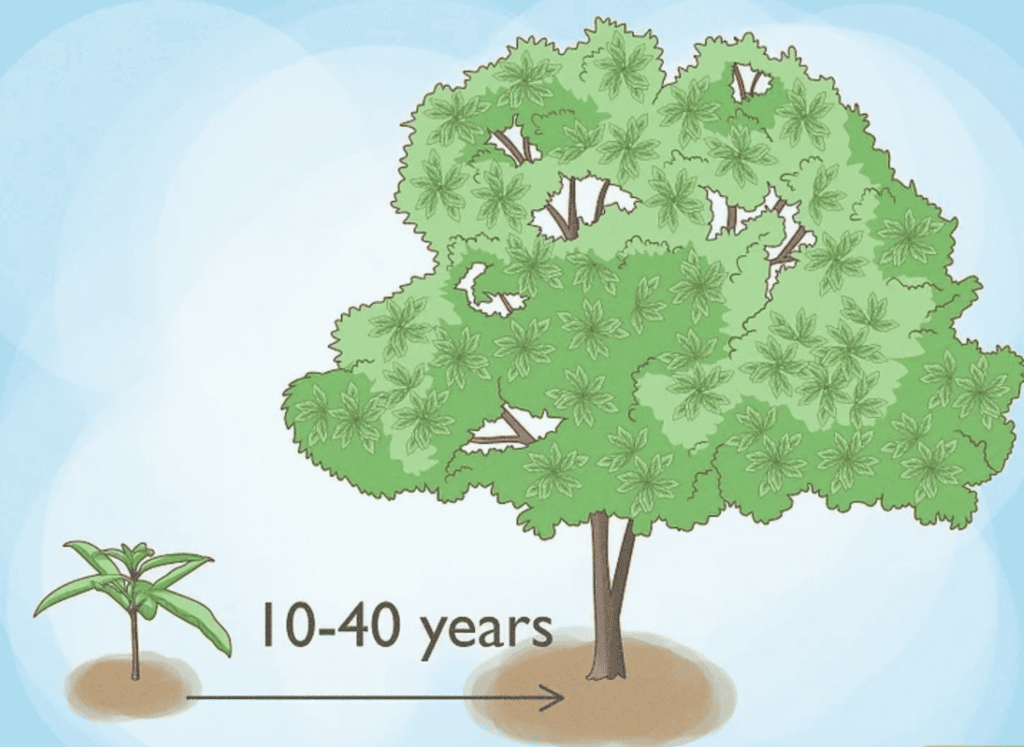
Many large multi-nationals are relying on re-forestation, (planting new seedlings) to offset their environmental impacts, while 15 billion trees are still being cut down each year to make room for agriculture, urban development, and plantations. Reforestation can be part of the solution, but replanted trees take decades to mature and typically create monoculture plantations without the same positive environmental benefits to water quality, habitat enhancement or biodiversity. The disparity between the number of mature tress cut down and new seedlings planted is estimated to be 1.9 billion trees annually. If planting trees is a positive environmental practice, then shouldn’t leaving mature trees in place be an even better practice? This is what the EUDR is trying to accomplish.
With the December 2025 EUDR compliance deadline looming, many companies are scrambling to make sure their supply chains are deforestation-free and looking for sustainable alternatives. ECOR’s non-wood products can be seamlessly incorporated into these supply chains, not as just a deforestation-free solution, but to help meet other climate goals as well. In stark contrast to the decades required to harvest trees for raw material, ECOR needs only six months per harvest cycle. As an alternative to cutting trees, our recycled non-wood raw materials support the circular economy by reducing the need for virgin timber harvesting. Old growth and other natural forests should be left intact where they can provide the most positive impact as the lungs of our planet.