
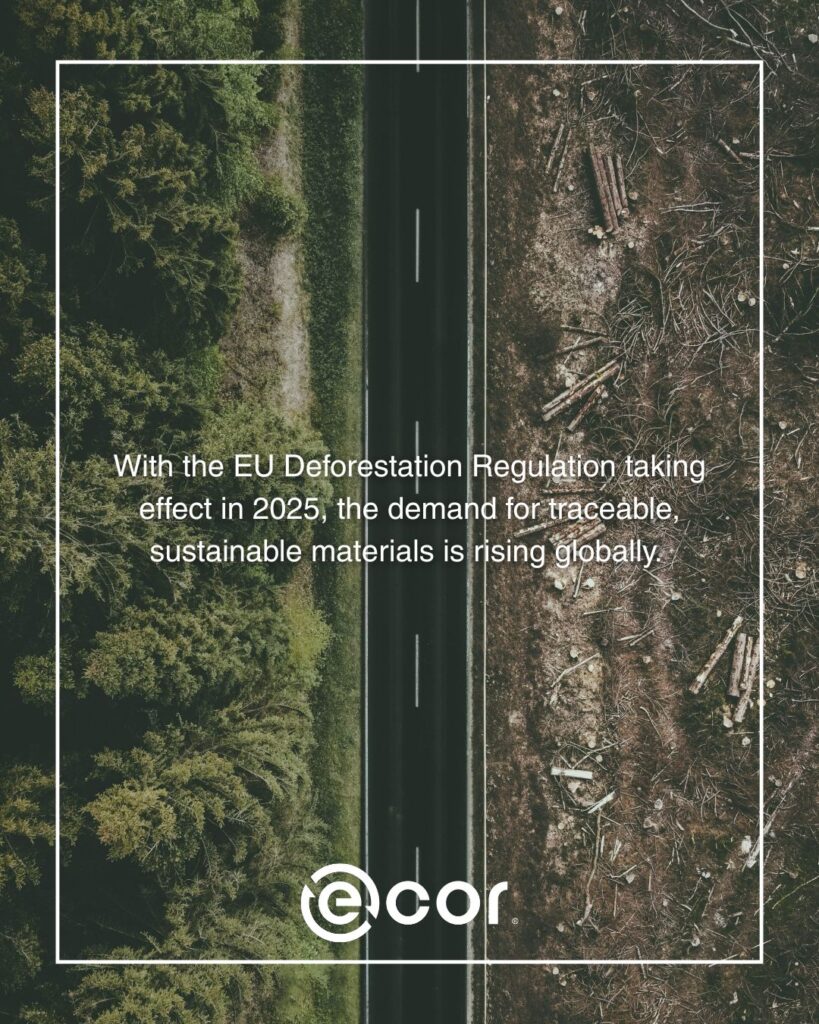
The EU Deforestation Regulation is set to be enforced at the end of 2025, cracking down on companies that are selling products that are linked to deforestation or forest degradation. This means that products being sold in the EU, derived from cattle, cocoa, coffee, palm oil, rubber, soy, or timber, cannot be linked to deforestation.
Simultaneously, a new Global Witness report finds that Chinese banks are the largest creditors to companies engaged in ‘forest-risk’ activities like illegal logging, land conversion, and deforestation tied to agriculture and industry. These activities are major drivers of biodiversity loss and climate change.
China does not currently have a comprehensive legal framework mandating full traceability in the supply chains of wood-based products. In the absence of such regulations, manufacturers are not required to disclose or verify the origin of timber used in panel products like MDF, HDF, and OSB. This lack of oversight lowers barriers to production, reduces compliance costs, and enables these products to be sold at highly competitive prices on the global market. China has established itself as the world’s largest producer of MDF due to a continuous demand stemming from consumption both domestically and internationally. An increase in furniture manufacturing, construction developments, and stricter MDF manufacturing guidelines are driving demand on the international market.
As a result, demand for these low-cost, non-traceable panels has grown significantly, especially in price-sensitive regions or sectors where deforestation regulations are weak. The continued rise in consumption of these materials further entrenches unsustainable practices and delays the global transition to verified deforestation-free alternatives.
At ECOR, we see a significant opportunity in the Chinese market to offer a sustainable alternative to conventional wood-based panels. According to a report from the NCBI, in 2021, China generated over 800 million tons of agricultural residues. Particularly straw from rice, wheat, and corn, where a great amount remains unutilized. By transforming this abundant resource into high-performance panels without the use of toxic adhesives or binders, we provide a circular solution that supports China’s growing demand for panel materials. This approach is especially relevant as global scrutiny intensifies on deforestation-linked products. With the EU Deforestation Regulation (EUDR) set to take effect by the end of 2025 and increasing pressure on financial institutions tied to forest-risk activities, the need for transparent, traceable, and deforestation-free materials is more urgent than ever. ECOR’s bio-based panels offer a scalable, compliant, and environmentally responsible alternative for both domestic and international markets.